
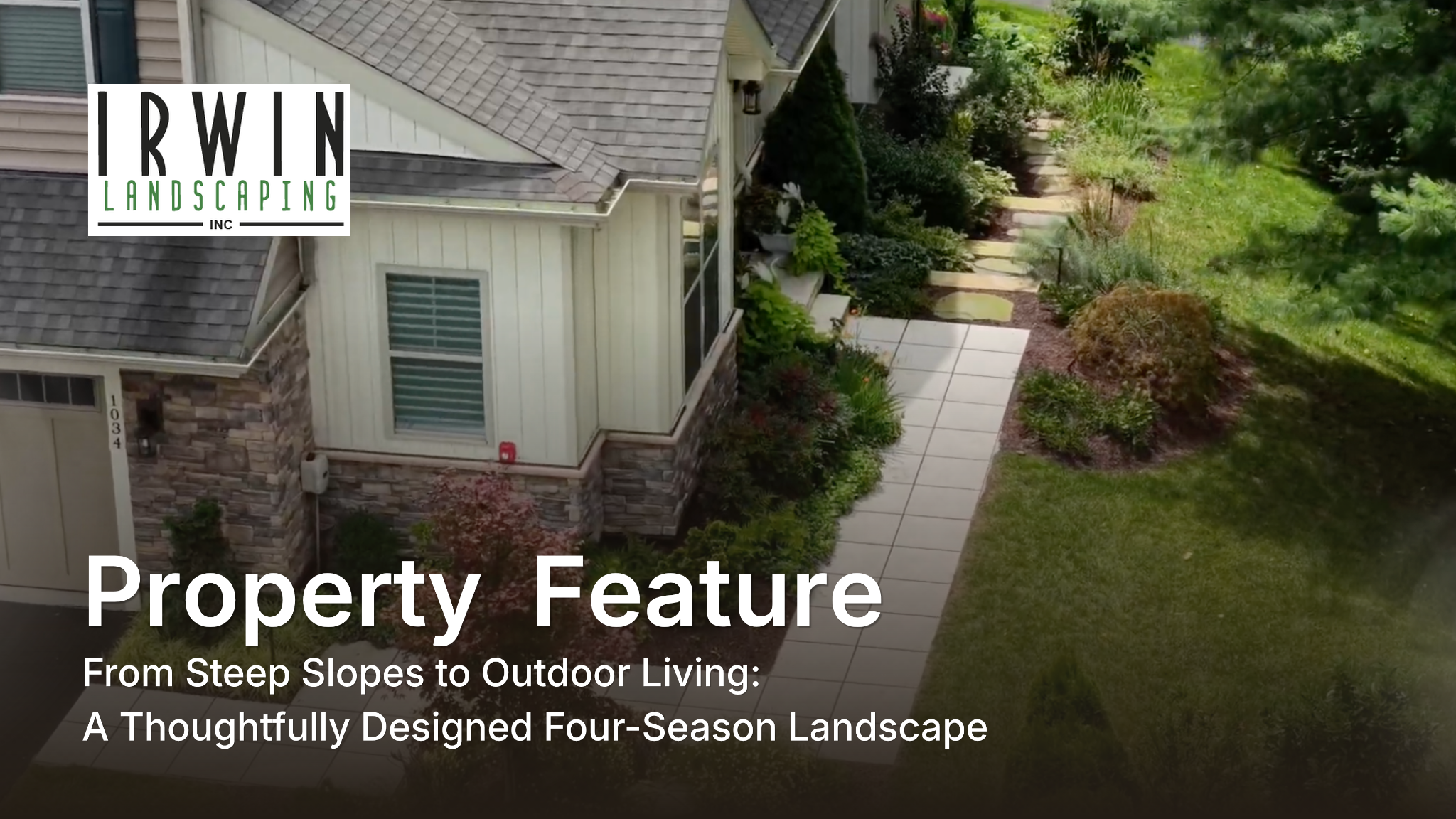
Designing a Landscape That Works for the Way You Live
A beautiful landscape is about more than choosing the right plants. The best outdoor spaces are designed around the people who will actually live with them—how they use the property, how much maintenance they want to take on, and what they want to see throughout the year.
That was the starting point for this complete landscape transformation. The homeowners wanted a property that felt lush and thoughtfully designed without requiring constant upkeep. At the same time, they wanted comfortable access throughout the property and a garden that offered something interesting in every season.
Maintenance Starts With the Design
One of the first questions to consider when designing a landscape is simple: Who is going to take care of it?
Some homeowners enjoy spending time pruning, planting, and working in the garden. Others want an outdoor space they can enjoy without dedicating every weekend to maintaining it.
For this property, the goal was to keep maintenance relatively low. Plants were installed densely enough that, as the garden matures, they will help fill the beds and reduce the amount of mulching and weeding needed.
There is still some seasonal care involved. Perennials may need to be cut back, evergreens occasionally shaped, and plants such as hydrangeas, crape myrtles, and viburnums pruned to keep them looking their best.
Because there is really no such thing as a completely maintenance-free garden.
The key is designing a landscape with a level of maintenance that makes sense for the homeowner.
Creating Better Access to the Property
The landscape also needed to solve a practical problem.
A steep slope made it difficult to travel comfortably between the front of the property and the backyard patio area. Rather than treating that slope as an obstacle, it became part of the design.
Large steps with pavers between them created a comfortable transition through the property while integrating naturally into the surrounding landscape.
Good landscape design should do both: look beautiful and make the property easier to use.
A Garden Designed for Four Seasons
Another major goal was creating a landscape that didn’t have just one moment of beauty.
Instead, the planting plan was designed to evolve throughout the year.
Spring begins with hundreds of bulbs, fresh perennial growth, emerging foliage, and ornamental grasses beginning to return.
Summer brings a completely different experience. Perennials fill the beds with color, hydrangeas come into bloom, and ornamental grasses add movement as they sway in the breeze. The landscape becomes full, green, and lush.
Fall introduces another layer of color and texture. Leaves begin changing, grasses shift toward warm tan tones, and seed heads become more prominent.
And even winter becomes part of the design.
Rather than cutting everything back immediately, ornamental grasses and selected perennials can remain standing. Their dried textures, seed heads, branches, and silhouettes provide structure and contrast against the winter landscape, while evergreen plantings continue to bring color.
Then spring arrives, and the cycle begins again.
Turning the Yard Into Outdoor Rooms
A well-designed landscape doesn’t have to feel like one large, open yard.
Different areas can have their own purpose and personality.
Planters near an entryway can create a welcoming moment. A shaded corner can become a quiet garden space. A patio can feel almost like an outdoor living room when it is surrounded by the right combination of plants, materials, and accents.
These smaller outdoor rooms make a property more interesting to explore and more enjoyable to use.
The landscape becomes a collection of experiences rather than simply something to look at from inside the house.
Designing Around the Property—and Its Requirements
Landscape design also involves working with the realities of the site.
For this particular project, the design needed to account for both HOA guidelines and local requirements related to hard surfaces and drainage. A permeable paving solution allowed water to move through the joints and into the base beneath the surface while still creating the functional walkway the homeowners needed.
These kinds of details may not be the first thing homeowners think about when imagining a new landscape, but they can make a major difference in how a project is designed.
An experienced landscape team can help navigate those challenges while finding creative ways to accomplish the larger vision.
A Landscape Should Be Personal
There isn’t one formula for the perfect garden.
One homeowner may want a colorful garden filled with different perennials that they enjoy tending throughout the season. Another may prefer a more relaxed landscape that requires only occasional pruning and cleanup.
The right design begins by understanding those preferences.
From maintenance and plant selection to access, seasonal interest, hardscaping, and outdoor living spaces, every decision should work together to create a property that feels natural to the people who call it home.