
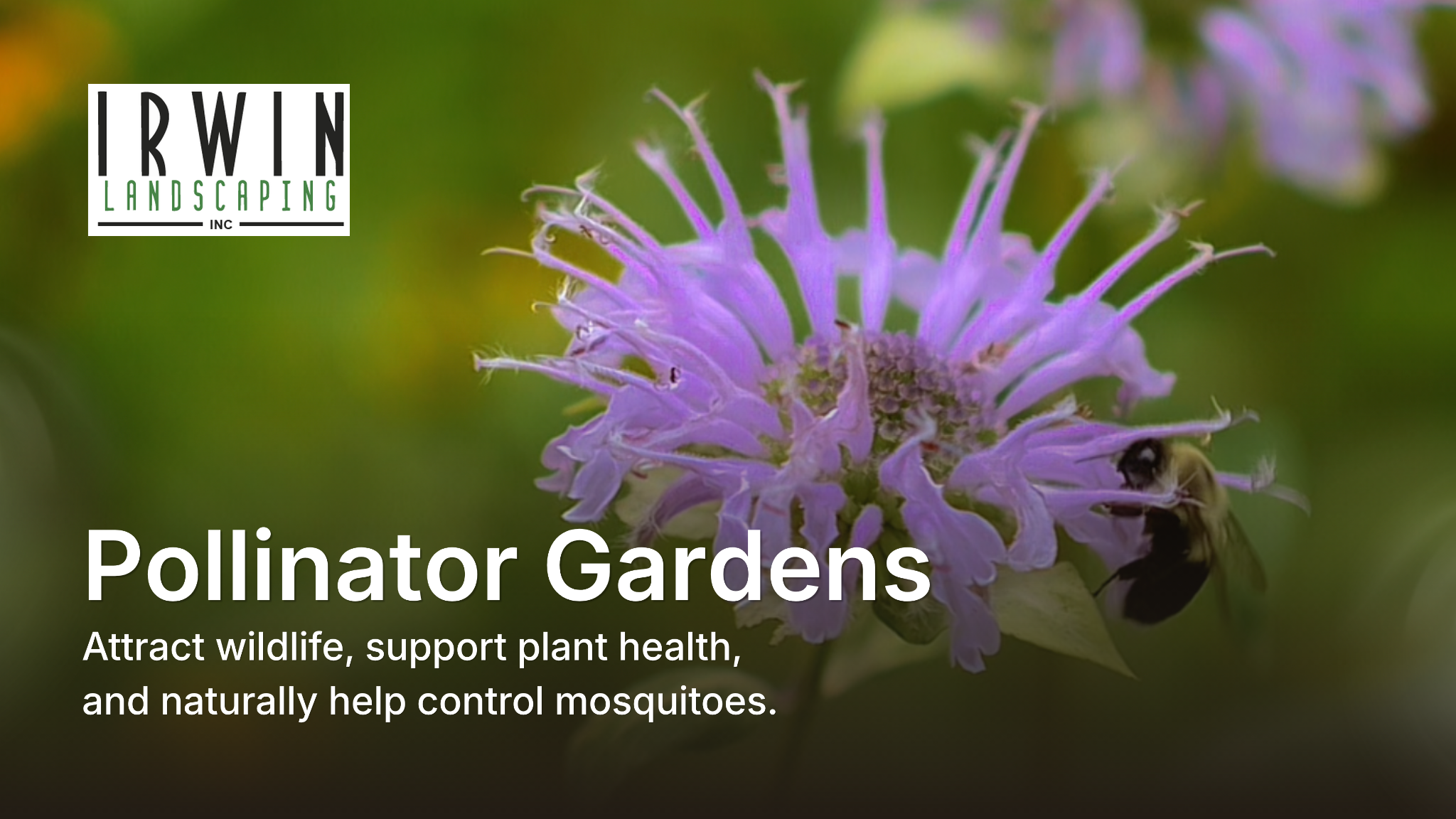
Why Pollinator Gardens Bring More Life to Your Landscape
A pollinator garden does more than add color to your property. It creates a living landscape filled with different plants, textures, birds, butterflies, bees, and other beneficial wildlife.
By combining a variety of plants instead of relying on a single species, pollinator gardens can make a yard feel more natural, active, and connected to the surrounding environment.
Creating a Landscape for Pollinators
Pollinator gardens are designed to attract animals and insects that move pollen from plant to plant.
Butterflies, bees, hummingbirds, and other pollinators can all become regular visitors when the landscape provides the flowers, shelter, and food sources they need.
This activity benefits more than the pollinator garden itself. Pollinators can also visit flowering plants throughout the property, including ornamental gardens and vegetable beds.
Plants such as hydrangeas, butterfly bushes, native perennials, herbs, and flowering annuals can all become part of a diverse landscape.
Supporting a Healthier Backyard Ecosystem
A meadow or pollinator garden can also attract birds and beneficial insects that contribute to the natural balance of the yard.
Instead of thinking about landscaping as simply filling beds with attractive plants, a pollinator-friendly design considers how those plants interact with the larger environment.
Adding features such as a properly placed bat house can provide additional habitat for wildlife, while a diverse mix of flowering plants encourages activity throughout the growing season.
The result is a landscape that feels alive.
Pollinator Gardens and Vegetable Gardens
Pollinator-friendly planting can be especially valuable around a vegetable garden.
Many vegetables depend on pollination to produce their best harvest. Bringing more bees and other pollinators into the landscape can help support flowering vegetable plants throughout the season.
Herbs and flowering companion plants can also be incorporated into these spaces. Instead of keeping herbs limited to a traditional vegetable bed, they can be planted throughout the landscape or grown in containers on a patio.
That makes them both useful and visually interesting.
Mixing Native and Non-Native Plants
A pollinator garden doesn’t necessarily have to contain only native plants.
Native species can provide important resources for local wildlife, but carefully selected ornamental plants can also add color, texture, and extended bloom periods.
The goal is to build variety.
Combining different plants that flower at different times helps keep the garden changing from spring through fall while providing a more consistent source of nectar and pollen.
A Garden With More Life
One of the most rewarding parts of a pollinator garden is seeing how quickly the landscape begins to attract activity.
Butterflies move between flowers. Hummingbirds stop by. Bees work their way through blooming plants. Birds find new places to visit and feed.
The garden becomes more than something beautiful to look at—it becomes part of a thriving outdoor ecosystem.