
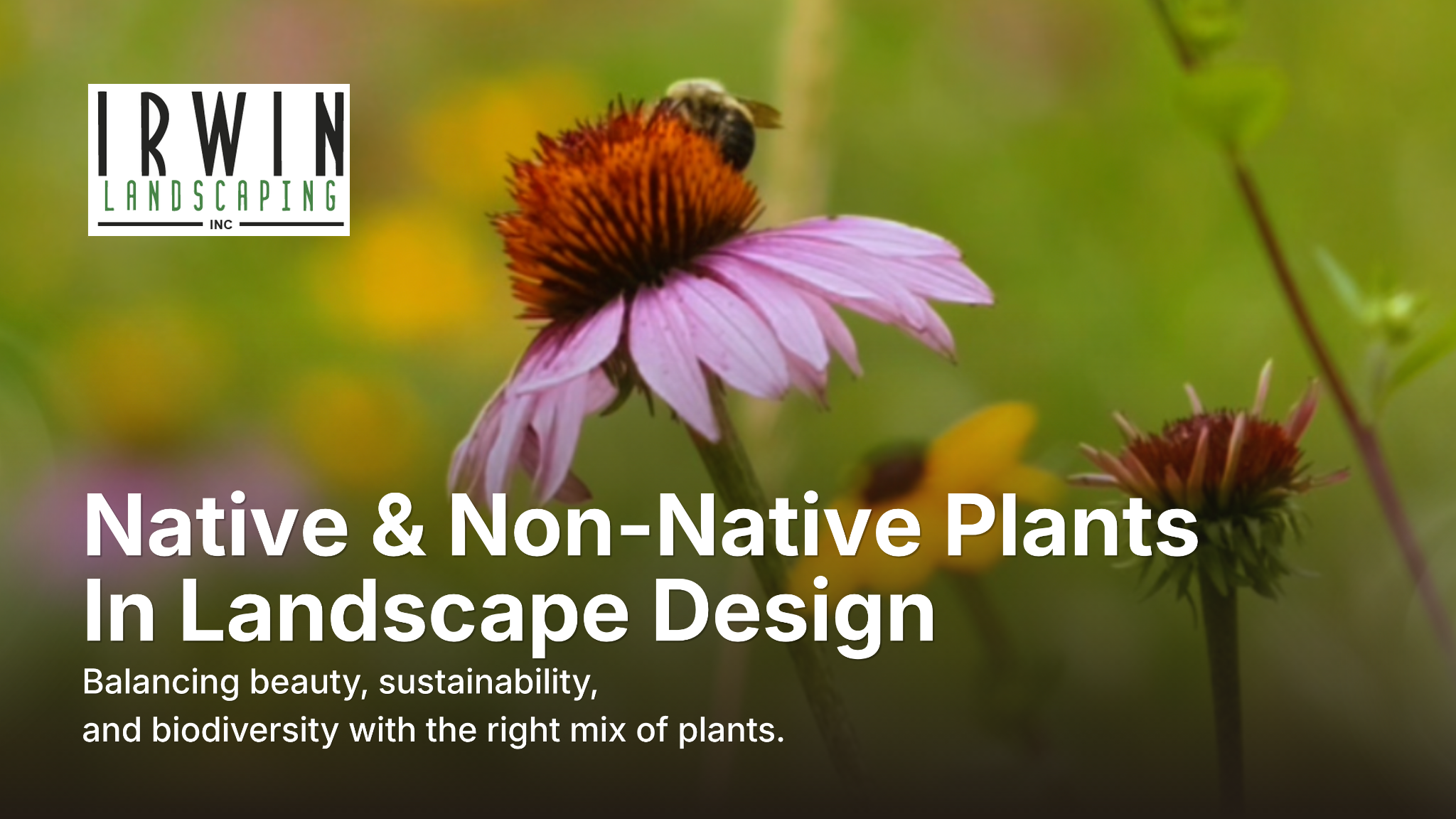
Native Plants: Beautiful, Resilient, and Made for the Landscape
Native plants can completely change the way a landscape looks, functions, and feels.
For this property, a native meadow was installed on a large hillside that would otherwise have required regular mowing or more intensive garden maintenance. Three years later, the area has become a natural, colorful landscape that works with the property instead of against it.
And that is one of the biggest advantages of using native plants: they are already well suited to the environment around them.
Why Native Plants Work So Well
Native plants are adapted to local growing conditions, which can make them a resilient choice for the landscape.
They are accustomed to seasonal changes and, when planted in the right conditions, can establish strong root systems and perform well throughout the year.
For challenging spaces such as hillsides, native meadows can also offer an attractive alternative to maintaining a traditional lawn.
Instead of continually mowing a difficult slope, homeowners can create a landscape filled with changing colors, textures, and movement.
Creating Habitat for Wildlife
Native landscapes aren’t just beautiful for homeowners. They can also provide valuable habitat and food sources for local wildlife.
Flowering native plants can attract bees, butterflies, and other pollinators, while larger planting areas provide shelter and habitat for insects, birds, and small animals.
A meadow is one way to accomplish this, but it isn’t the only option.
Smaller pollinator gardens can be incorporated closer to the home, along walkways, or in unused areas of the yard. By combining many different plant varieties, these gardens create diversity rather than relying on a single species.
That diversity helps make the landscape more interesting for both people and wildlife.
Benefits Below the Surface
Some of the biggest benefits of native plants aren’t immediately visible.
Many native species develop substantial root systems that help stabilize soil and improve its structure over time. Those roots also allow plants to interact naturally with the surrounding ecosystem.
This makes native planting particularly useful in areas where erosion, slopes, or difficult growing conditions need to be considered as part of the overall landscape design.
Does Your Garden Have to Be 100% Native?
Not necessarily.
While an entirely native landscape can be a great choice, many homeowners prefer a combination of native and non-native plants.
Popular ornamental plants such as hydrangeas, crape myrtles, and certain butterfly bushes can add dramatic summer color and texture. Meanwhile, native trees such as dogwoods and redbuds can bring seasonal interest while supporting a landscape that feels connected to the region.
The two approaches do not have to compete.
A thoughtful landscape can combine native plants with carefully selected ornamentals to create the look a homeowner wants while still incorporating many of the ecological benefits native plants provide.
Finding the Right Balance
Every property—and every homeowner—is different.
Some people want a natural meadow filled almost entirely with native species. Others want a more traditional garden with native plants mixed throughout. Both can work when the plant choices fit the site and the overall landscape design.
The goal is to create a landscape that looks beautiful, performs well, and makes sense for how the property will be used.
Interested in adding native plants, a meadow, or a pollinator garden to your property? Learn more about creating a landscape that works naturally with its surroundings at Irwin Landscaping.