A Four-Season, Low-Maintenance Landscape Designed Around the Homeowner
Every successful landscape design starts with more than choosing the right plants. It starts with understanding how the homeowner actually wants to use and maintain the property.
For this project, Irwin Landscaping completed a full landscape transformation with several priorities in mind: create comfortable access around the property, introduce year-round interest, work within township and HOA requirements, and keep ongoing maintenance relatively simple.
Designing With Maintenance in Mind
One of the first conversations we have with a client is about maintenance.
There is really no such thing as a completely maintenance-free garden. Every landscape requires some level of care. The goal is to design that care around the homeowner.
Some clients love spending time in their gardens and want constant color, tightly shaped plants, and different combinations of perennials throughout the season. Those landscapes can be beautiful, but they naturally require more pruning and attention.
For this homeowner, the goal was different. They wanted a beautiful landscape without spending every weekend maintaining it.
We designed the garden so most of the work could be handled with basic seasonal maintenance. Perennials need to be cut back annually, evergreens may need an occasional trim to maintain their shape, and larger plants such as hydrangeas, crape myrtles, and viburnums can be pruned once a year.
Even mulching should decrease over time. The planting beds were designed densely enough that, as the landscape matures, the plants will begin filling much of the available space.
The result is what we would consider a relatively low-maintenance garden without sacrificing variety or visual interest.
Creating Better Access Around the Property
The property itself also presented an important design challenge.
While the homeowners had outdoor living space toward the back of the home, getting from the front walkway to the rear of the property meant navigating a significant slope.
They wanted the entire property to feel accessible from outside.
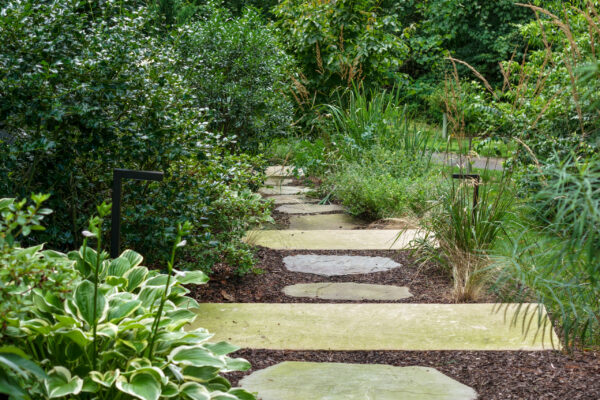
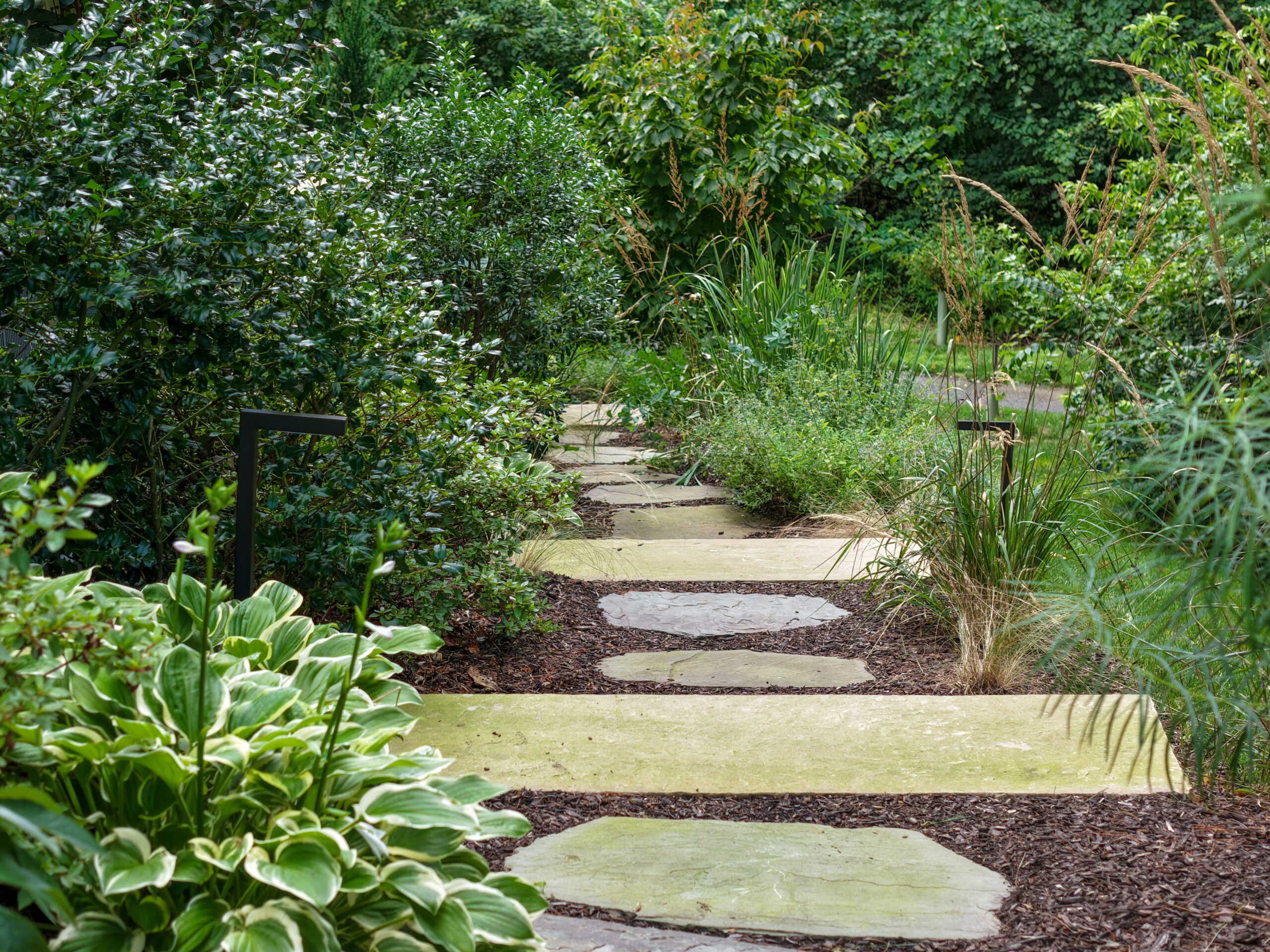
To solve that problem, we incorporated a series of large steps with pavers between them, creating a comfortable transition down the grade and connecting the front and rear portions of the landscape.
Instead of treating the slope as an obstacle, it became part of the overall design.
Building a Four-Season Garden
The homeowner’s previous property had a beautiful garden filled with interesting plant material, and that gave us a good understanding of the type of landscape she enjoyed.
Our goal was to bring that same sense of variety to the new property while designing specifically for its conditions, including some areas with significant shade.
Like the majority of landscapes we design, this became a true four-season garden.
Spring
In spring, hundreds of bulbs begin emerging near the front of the property.
Perennials start pushing through the soil, ornamental grasses begin growing again after their winter cutback, and different foliage textures appear throughout the beds.
Even before everything begins flowering, there is a sense that the landscape is coming back to life.
Summer
By summer, the garden is full.
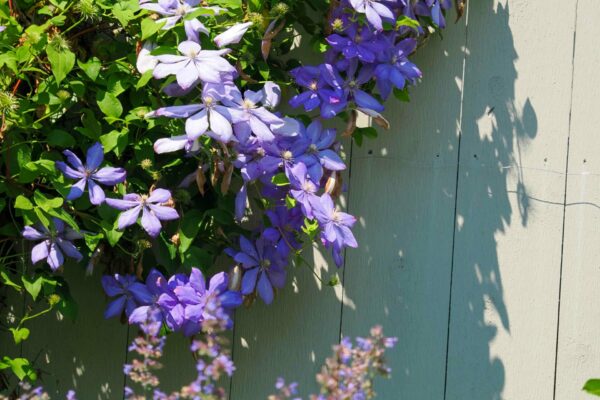
Perennials are flowering, hydrangeas are in bloom, ornamental grasses have gained height and movement, and the planting beds become lush and layered.
The combination of foliage, flowers, and texture creates an immersive landscape without needing excessive seasonal maintenance.
Fall
Fall brings an entirely different character to the property.
Leaves on the deciduous plants begin changing color while ornamental grasses transition into warmer tan tones. Their seed heads become more prominent, adding texture and movement throughout the landscape.
Rather than losing interest as summer ends, the garden simply transitions into its next season.
Winter
Winter interest is something that is often overlooked in landscape design.
Here, we intentionally allow many ornamental grasses to remain standing throughout the winter. Some perennials are left in place as well, creating contrast against the surrounding landscape.
Once deciduous plants lose their leaves, the structure of their branches becomes part of the design. Evergreens and plants such as the weeping Japanese maple provide additional form and visual interest.
Then spring arrives, and the entire cycle begins again.
Creating Outdoor Rooms
Plants are only one part of making a landscape feel finished.
Throughout this property, smaller accents help define different areas and make them feel more like outdoor rooms.
The homeowner enjoys planters, so large urns near the front entrance introduce additional seasonal color. In the shaded areas toward the back, planters filled with foliage help make the space feel more intimate and intentional.
That concept carries through many of our designs.
Rather than thinking about a property as one large yard, we try to create individual spaces throughout it. The more thoughtfully designed spaces a property has, the more opportunities there are to experience and enjoy the landscape.
Designing Around HOA and Township Requirements
This project also required coordination with both the homeowners association and Kennett Township.
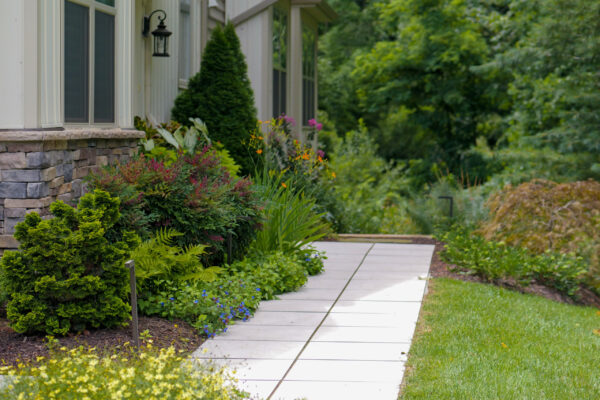
Township regulations limit the amount of non-permeable surface that can be installed on certain properties. Because of those requirements, the hardscaping for this project needed to incorporate a permeable solution.
The joints between the pavers allow water to move down through the surface and into the stone base below rather than simply running off the property.
For the HOA, we prepared the necessary landscape plans and worked through the approval process while ensuring the materials and colors complied with community requirements.
These types of regulations are common throughout Pennsylvania and can have a significant impact on the design of walkways, patios, driveways, and other hardscape areas.
Part of good landscape design is understanding those limitations early and finding a solution that accomplishes the homeowner’s goals while meeting the applicable requirements.
There is almost always a way to make it work.
A Landscape Designed for the Way You Live
The finished property balances function, four-season interest, accessibility, and manageable maintenance.
Most importantly, it was designed specifically around the people who live there.
Whether a homeowner wants an elaborate garden filled with continuous seasonal color or a landscape that requires only minimal annual upkeep, those decisions should be considered from the very beginning of the design process.
At Irwin Landscaping, that’s where every project starts: understanding the property, understanding the homeowner, and designing a landscape that brings the two together.