A Complete Property Transformation Rooted in Native Planting
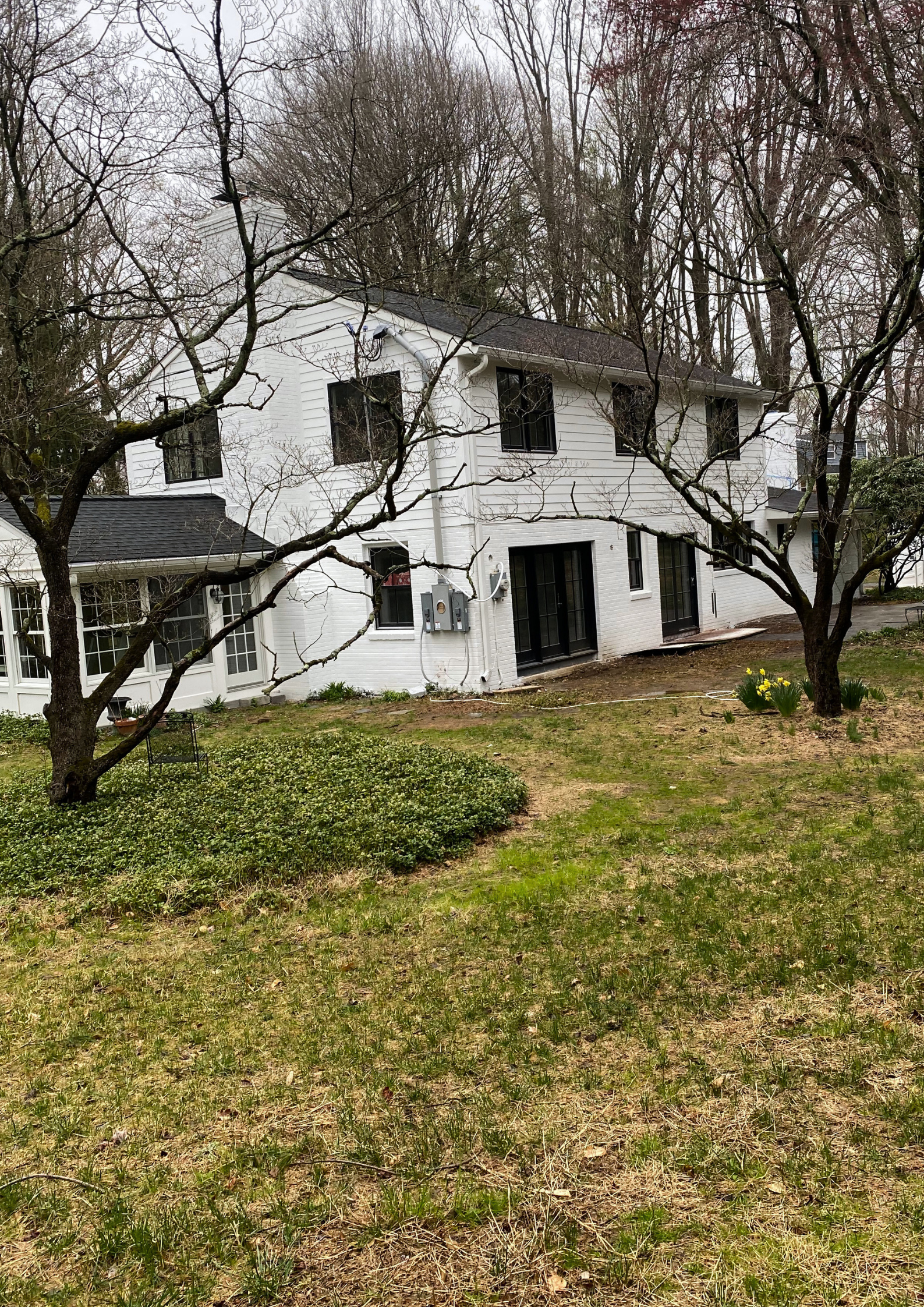
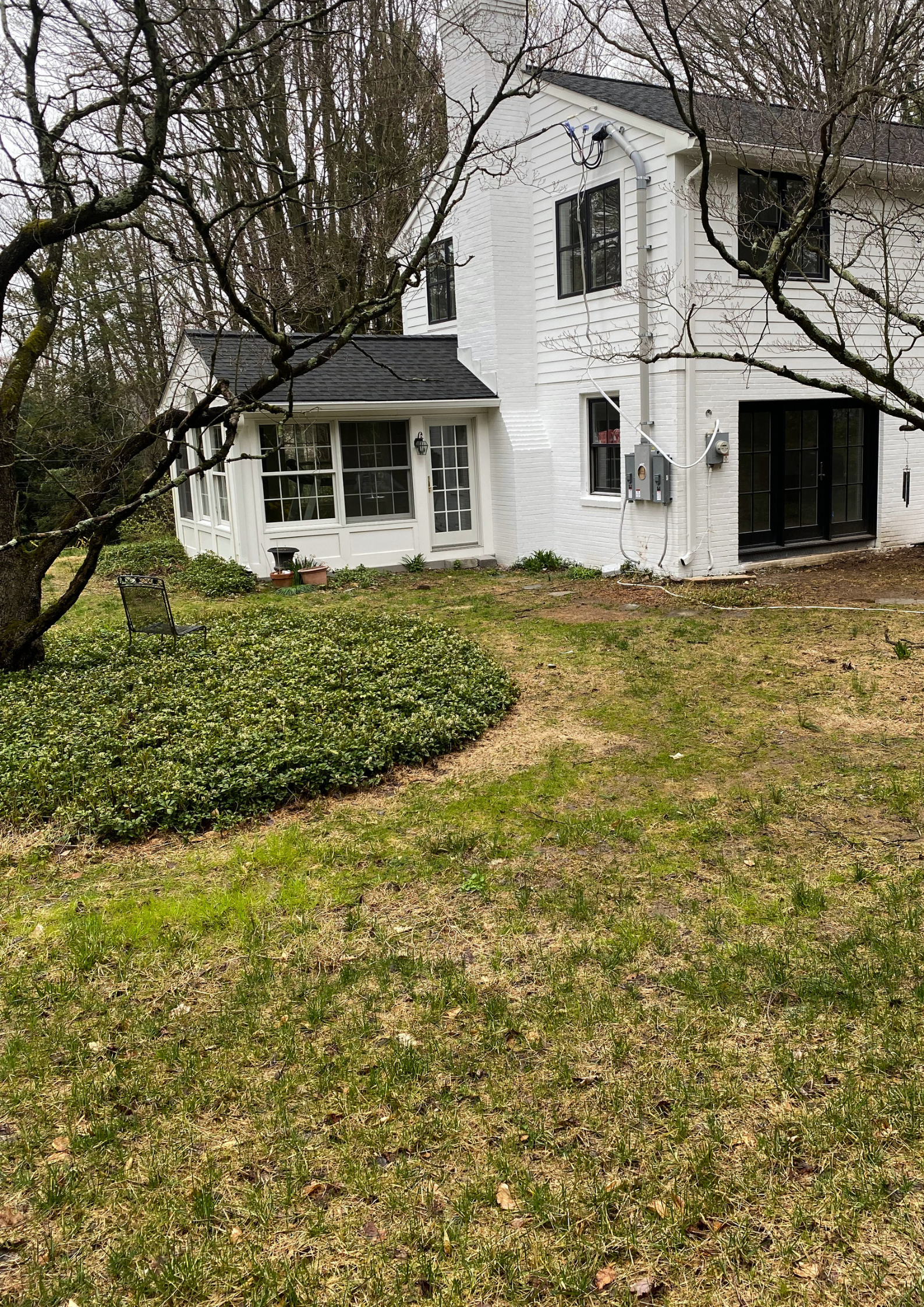
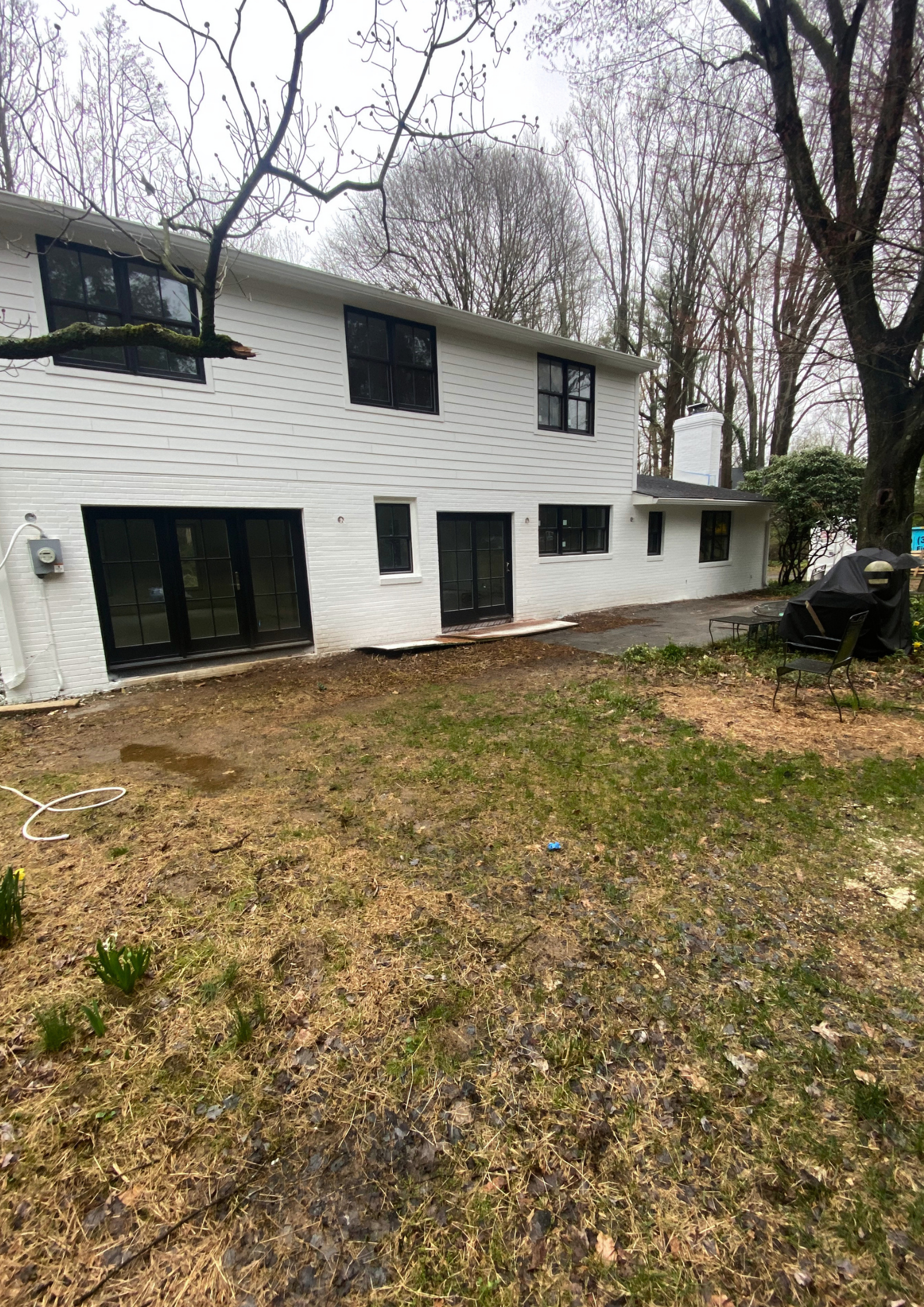
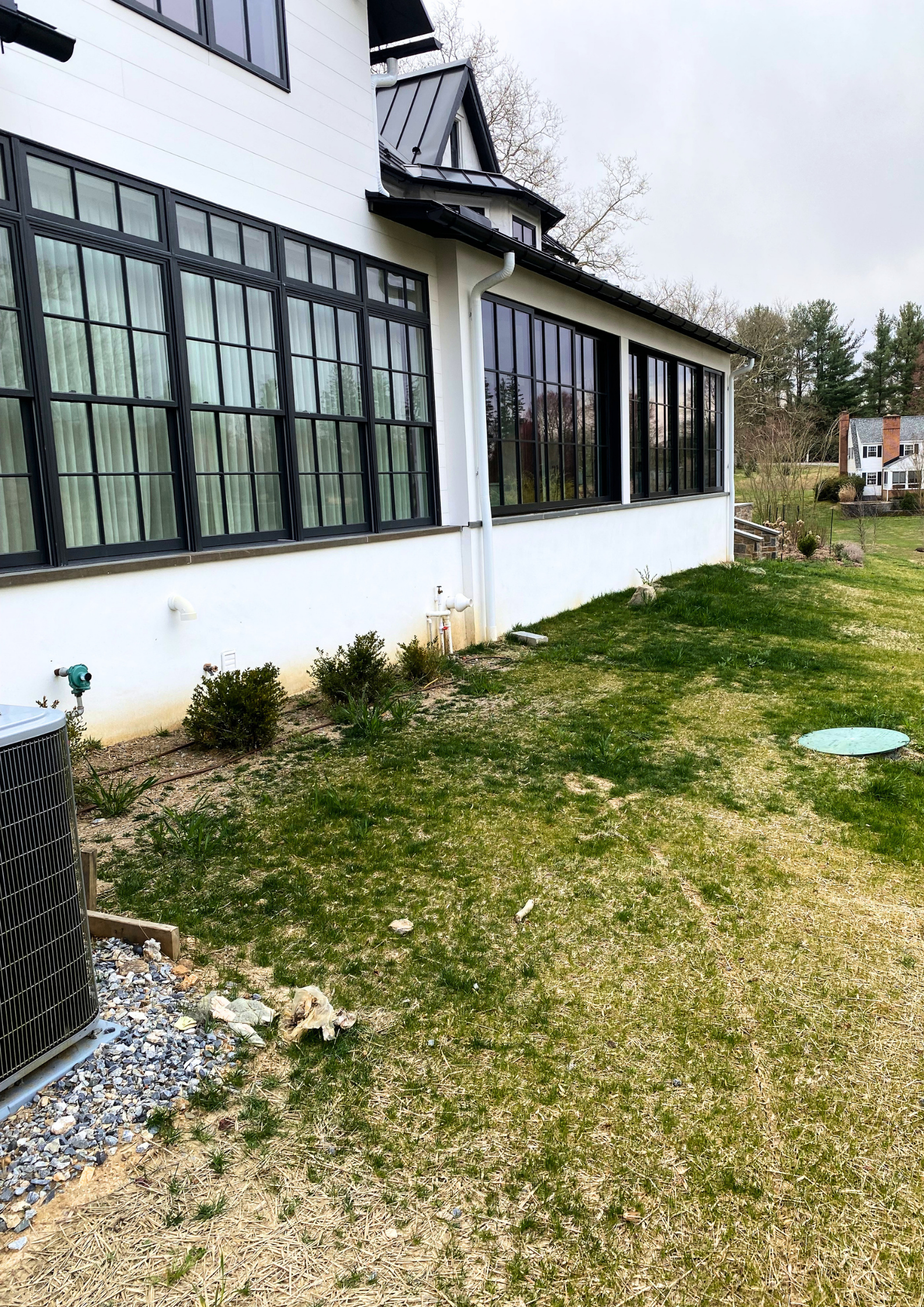
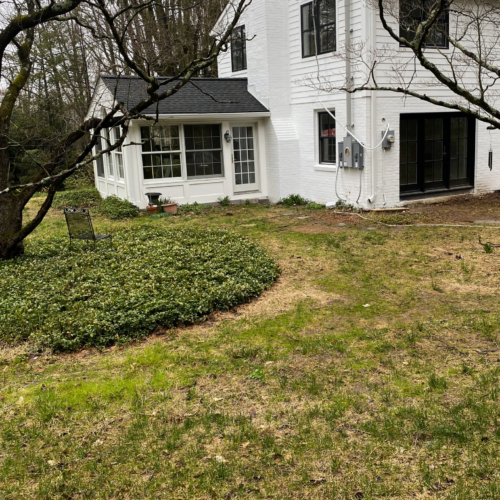
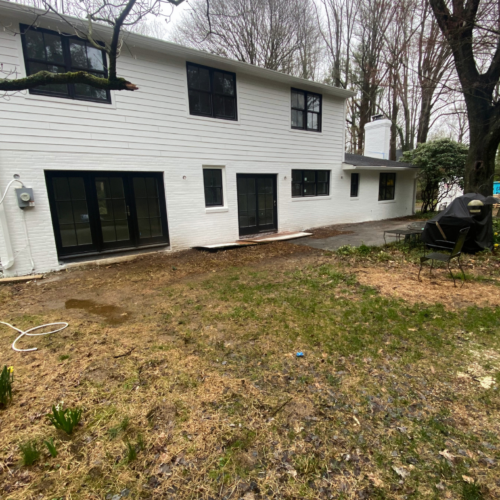
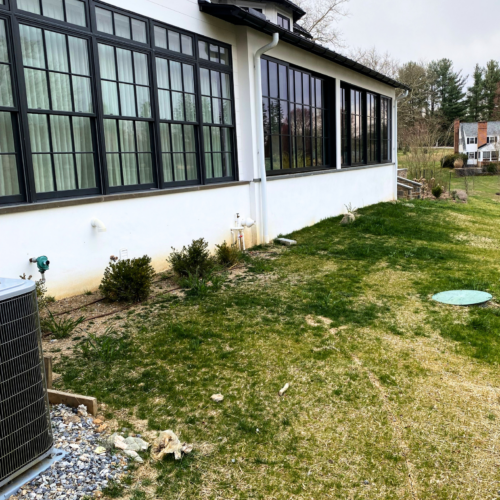
When the homeowners completed renovations to their house, the surrounding landscape remained largely unfinished. The front yard offered little privacy from the road, the property lacked inviting outdoor spaces, and the owners wanted significantly more greenery without creating a lawn that required constant mowing and maintenance.
The setting presented an additional design opportunity. With portions of the property shaded or semi-wooded, the homeowners were not looking for a conventional suburban landscape dominated by turf. They wanted the property to feel natural, private and alive with wildlife while still remaining intentional, comfortable and easy to navigate.
Designing Around the Homeowners’ Vision
Irwin Landscaping began with the way the homeowners wanted to experience the property.
Their goals included:
- Creating a predominantly native garden
- Reducing the amount of lawn and routine mowing
- Adding privacy from the road
- Establishing a welcoming entrance to the home
- Creating comfortable sitting and entertaining areas
- Attracting butterflies, hummingbirds and songbirds
- Maintaining year-round structure and visual interest
- Connecting the front, side and rear yards with a walking path
Rather than applying a standard planting plan, Irwin developed a design around the property’s wooded character, changing light conditions and the homeowners’ desire for a landscape that felt immersive without becoming overgrown.
The result was a design that used approximately 90 percent native planting throughout much of the property, particularly along the walkways, lawn edges and garden areas.
Reimagining the Entire Property
The transformation extended across the front, back and side yards.
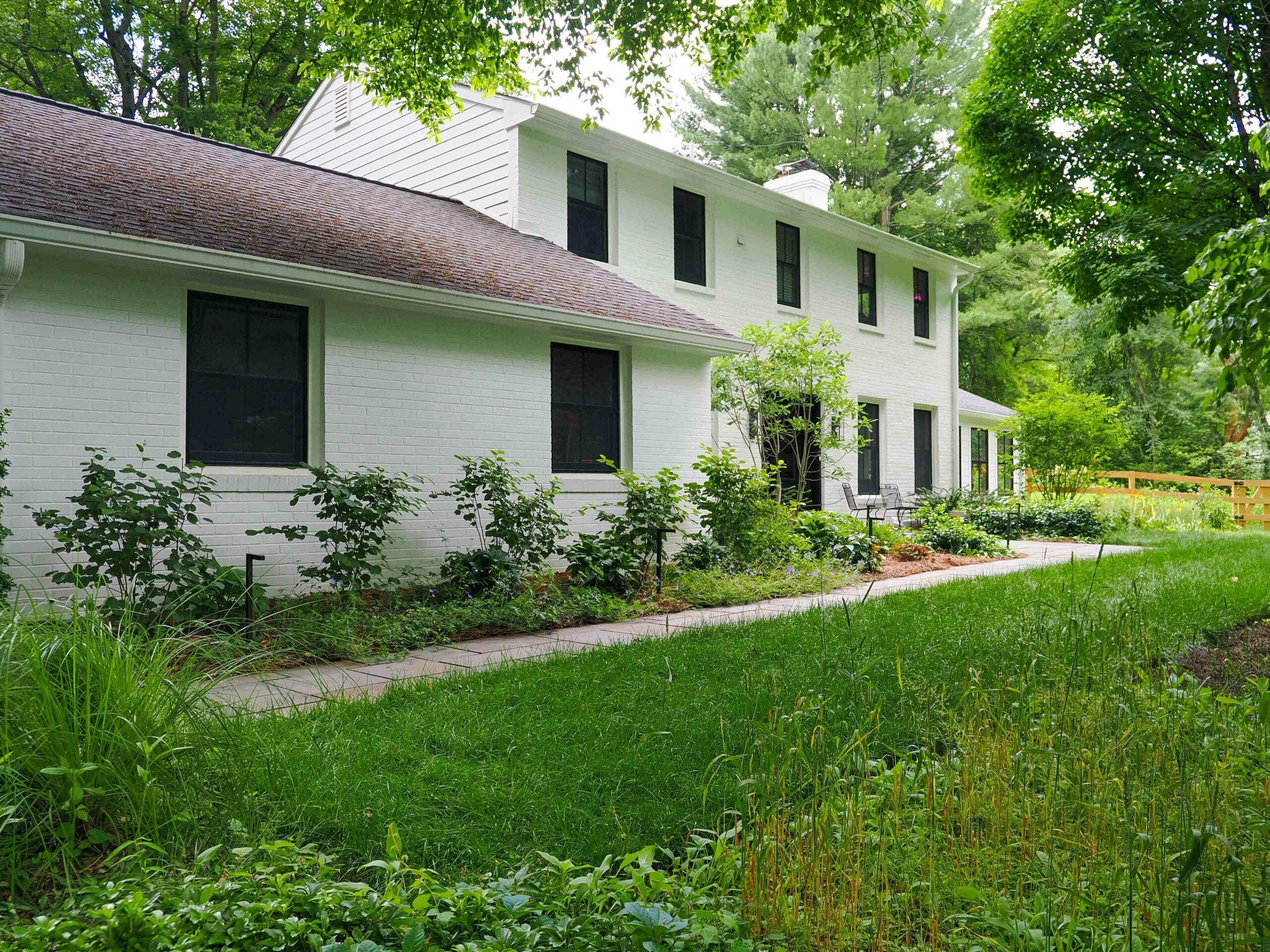
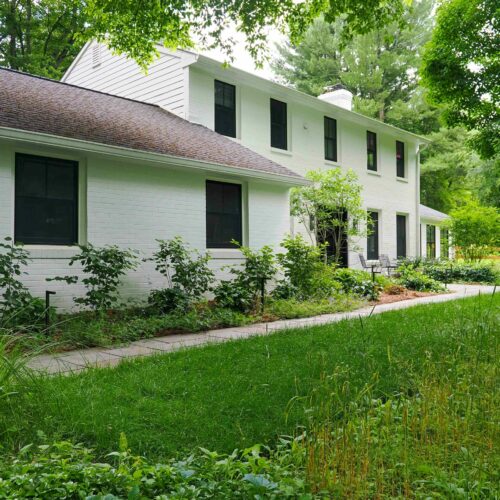
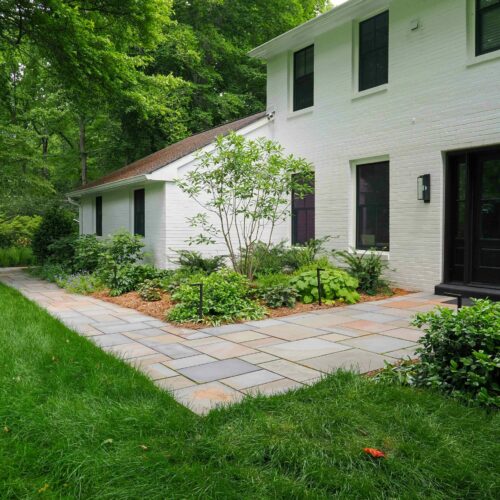
In the front, layered planting introduced greenery and screening to provide greater privacy from the road. Native plants were selected to perform well within the shaded and semi-wooded conditions while helping the landscape feel connected to its natural surroundings.
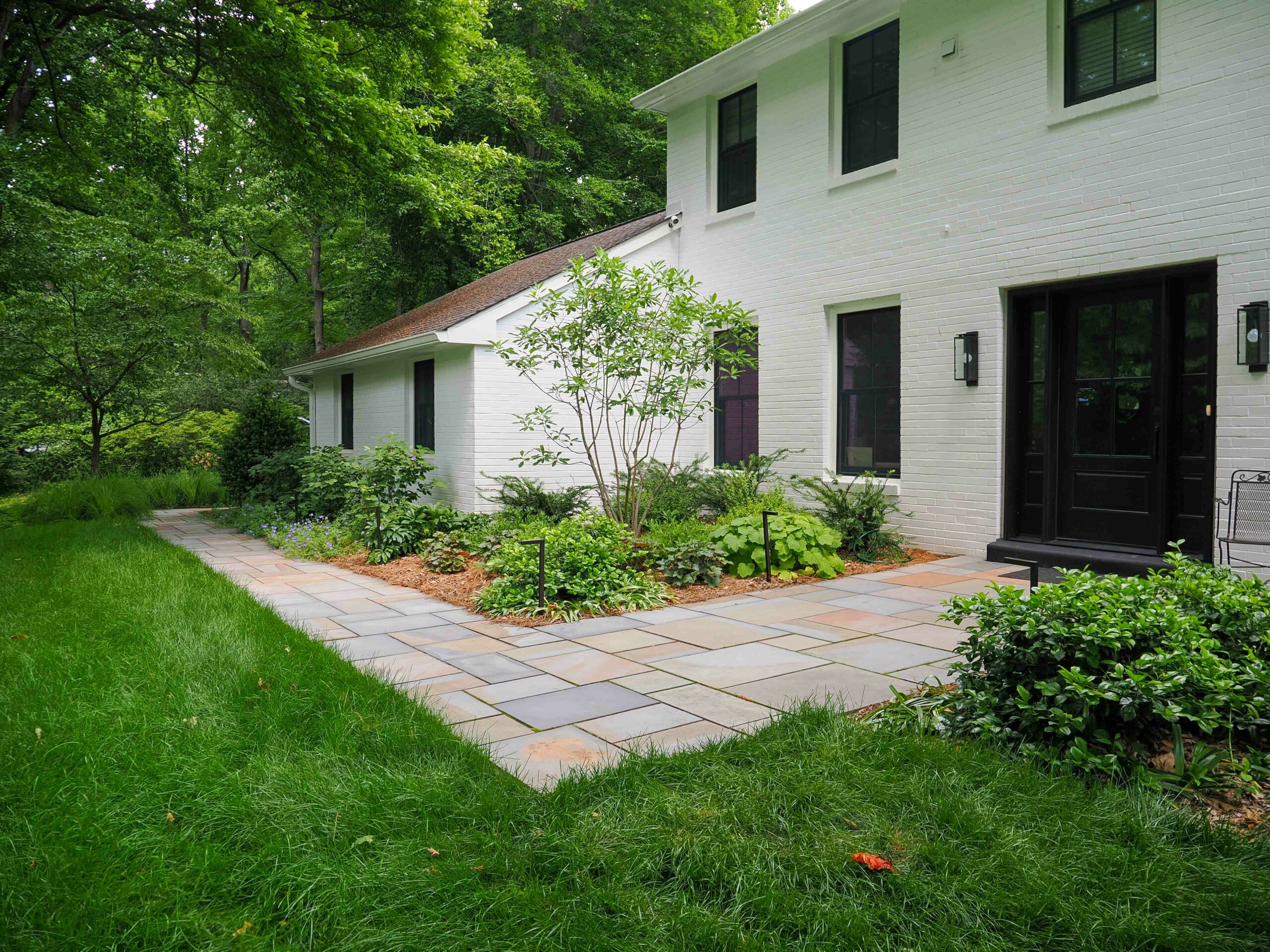
A new flagstone walkway created a more welcoming approach to the home. Irwin expanded the path and maintained a five-foot grass perimeter along portions of the walk. This small amount of lawn gives the garden breathing room and prevents the entrance from feeling crowded, while still keeping mowing requirements low.
A new front sitting area was also incorporated into the design. A magnolia was positioned to eventually provide filtered shade as it matures, creating a comfortable destination within the garden rather than treating the front yard only as a space to pass through.
Evergreen plantings were retained and incorporated so the property would maintain structure and interest during the winter, when many perennials become dormant.
A Backyard Designed for Living
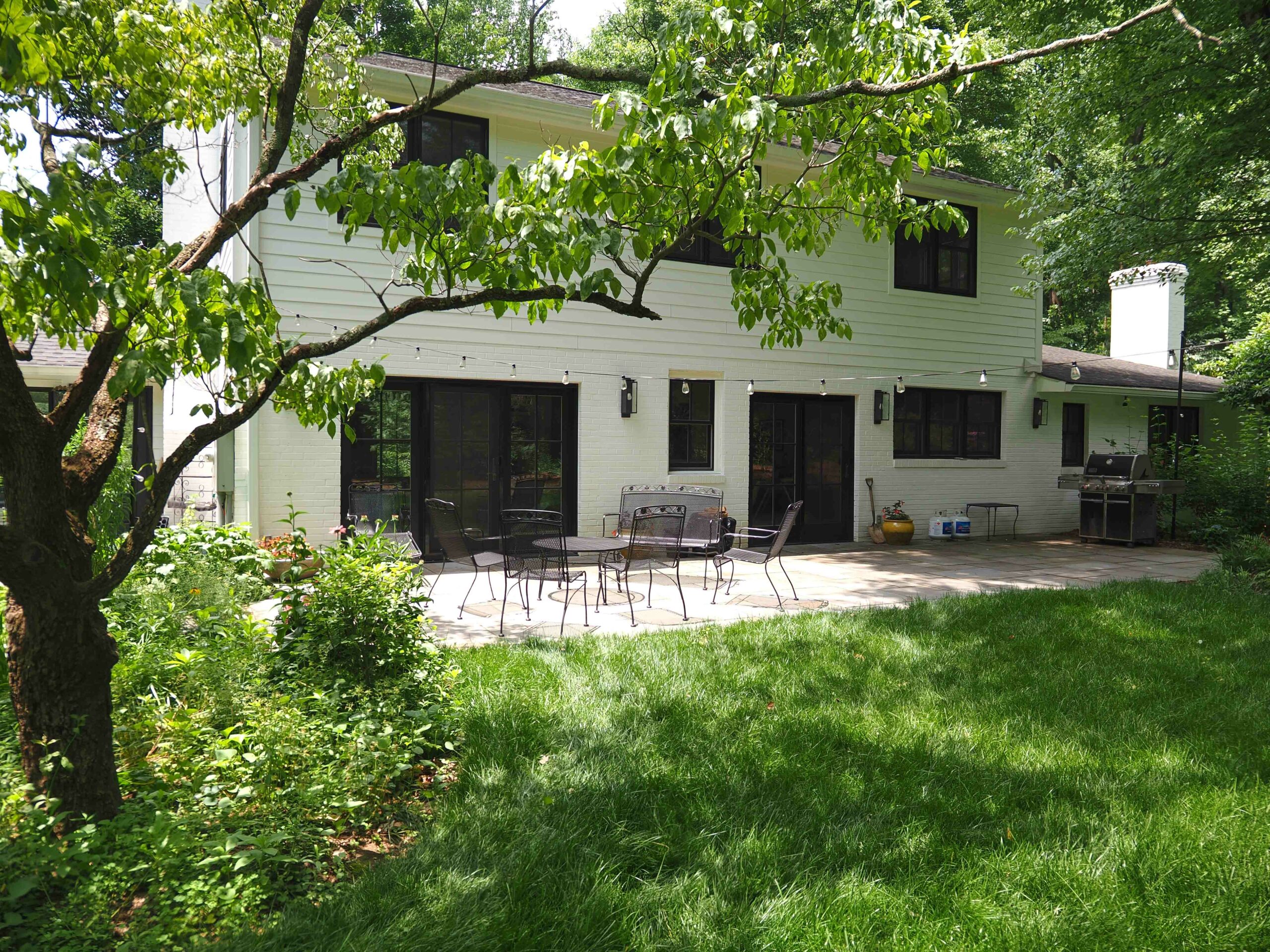
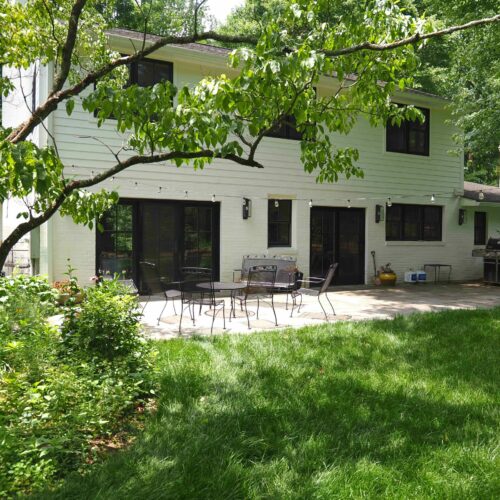
The rear of the property was redesigned as a more functional outdoor living and entertaining area.
Irwin completed hardscaping work around the back patio and was able to reuse stone that was already present on the property. Reusing the existing material helped control project costs while reducing waste and the need to bring in entirely new materials.
The homeowners gained a more inviting place to sit, gather and enjoy the surrounding garden, while the reused stone helped the finished patio feel established and connected to the property.
The walking path continues through the side and rear portions of the landscape, allowing the homeowners to experience the garden as a journey rather than a collection of disconnected beds.
Planting for Wildlife and Seasonal Interest
One portion of the garden sits outside the homeowner’s office, where the goal was to create a view filled with movement and wildlife.
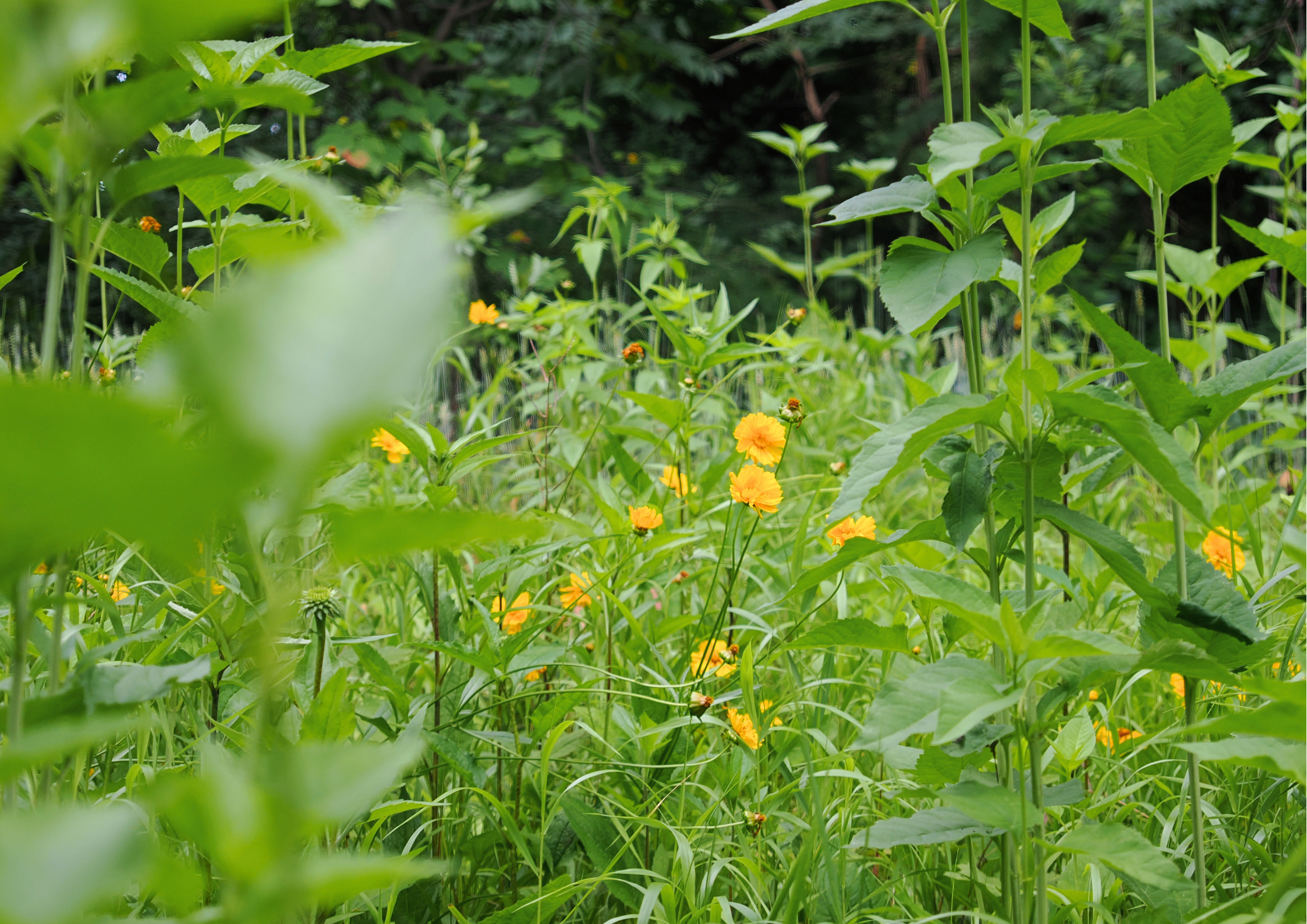
Irwin designed this area as a pollinator garden using a diverse combination of flowering plants intended to attract butterflies, hummingbirds and different species of birds. The variety of plants also provides changing color, texture and activity throughout the growing season.
Because deer pressure is significant on the property, fencing was installed along the back and one side of the yard. The enclosed area also gives the homeowners flexibility as they consider adding a dog in the future.
Why Native Plants Made Sense Here
Irwin does not approach every landscape with a requirement that it must be entirely native. Each design begins with the client, the property and the desired experience.
For this project, native planting aligned exceptionally well with the homeowners’ hopes. Native species can provide food and habitat for local pollinators and birds, adapt well to regional conditions and reduce the need for large expanses of lawn. When selected and placed thoughtfully, they can also create a landscape that feels rich, layered and closely connected to its surroundings.
The goal was not to create an unmanaged meadow. It was to create a refined, highly personal landscape that offers privacy, usable outdoor spaces, seasonal beauty and greater ecological value.
A Landscape Unique to the Property
This project reflects Irwin Landscaping’s collaborative philosophy.
The homeowners brought a clear vision: less grass, more privacy, abundant greenery, outdoor gathering spaces and a landscape that would welcome wildlife. Irwin translated those goals into a cohesive design that responded to the architecture, site conditions and natural character of the property.
The finished landscape could not simply be copied and installed somewhere else. It belongs to this home, this setting and the people who live there.