
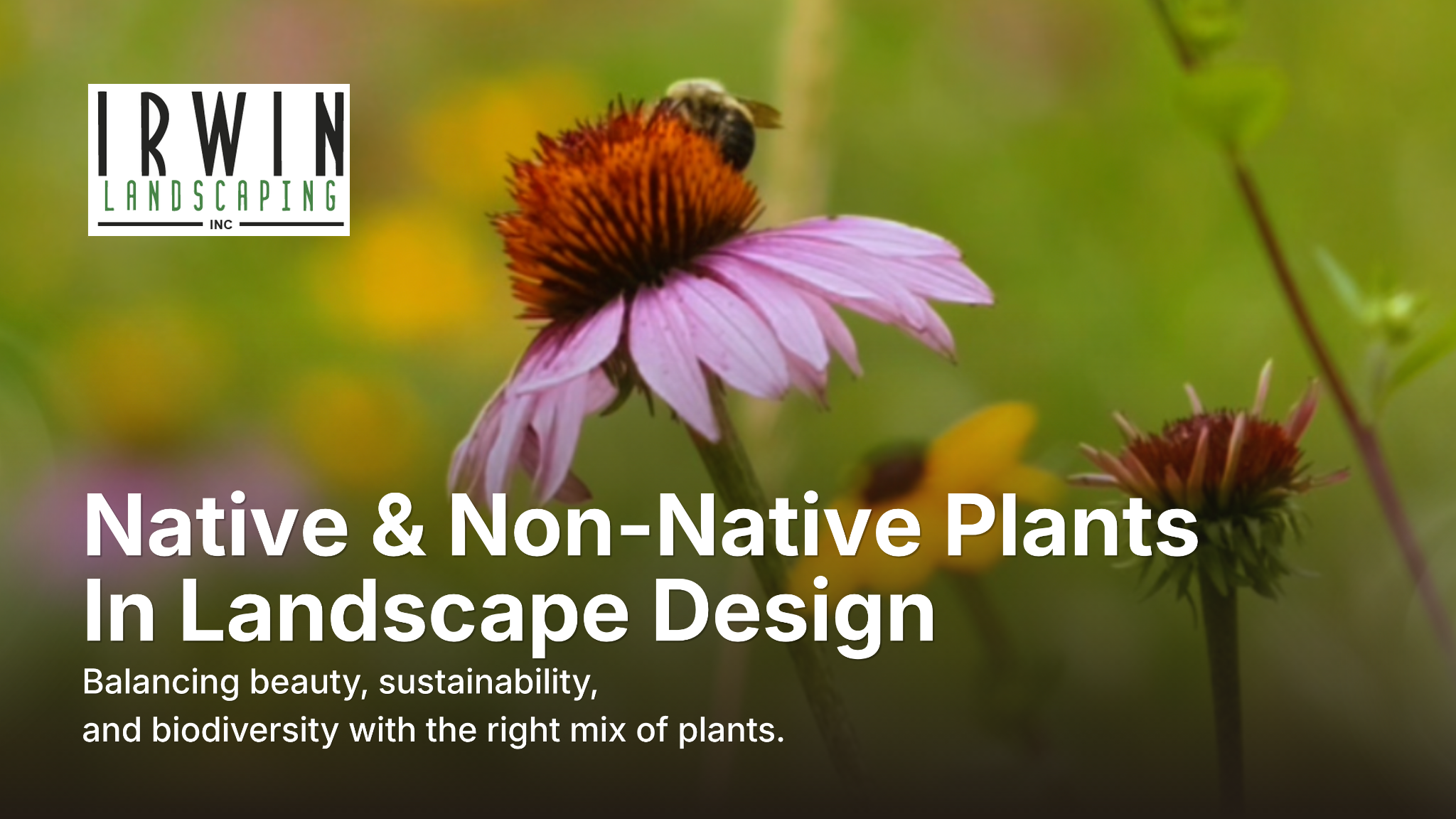
Native gardening has become increasingly popular, and for good reason.
Native plants can create beautiful, resilient landscapes while supporting pollinators, improving soil health, and reducing some of the ongoing maintenance required by more traditional gardens.
At Irwin Landscaping, however, our philosophy isn’t that every landscape has to be 100% native.
It’s about using the right plants in the right places and creating a landscape that works for the property, the environment, and the homeowner.
Why We Love Native Plants
Native plants are naturally well suited to the conditions of the region. Because they have adapted to the local environment, they can handle seasonal changes and weather conditions extremely well when planted in appropriate locations.
That resilience makes them an excellent tool in landscape design.
One of our recent projects provides a perfect example. A large hillside on the property would have been difficult to maintain as a traditional lawn. Regular mowing on a significant slope wasn’t appealing to the homeowner, and turning the entire hillside into a conventional garden would have created its own maintenance challenges.
Instead, we created a native meadow.
After approximately three years of growth, the meadow has developed into a beautiful, natural landscape that changes throughout the seasons while dramatically changing how the hillside needs to be maintained.
It’s a good example of something we believe strongly at Irwin Landscaping: landscape design should solve problems, not create new ones.
Native Gardens Can Support Pollinators and Wildlife
One of the greatest benefits of native gardening is the habitat it can create.
Native flowering plants provide food and shelter for local insects and wildlife. Bees, butterflies, and other pollinators can all benefit from a landscape containing a diverse selection of plants.
That doesn’t necessarily require turning an entire property into a meadow.
A pollinator garden can be incorporated into a smaller area near the house, placed within an existing landscape bed, or used to transform an unused section of the yard.
And variety matters.
Rather than creating a monoculture with only one or two plants, a thoughtfully designed pollinator garden might contain dozens of different varieties. Different plants bloom at different times, creating changing color throughout the growing season while providing a broader habitat for pollinators.
Walk through a healthy pollinator garden in the summer and you’ll often see exactly why people enjoy them: butterflies moving from plant to plant, bees working through the flowers, and a garden that genuinely feels alive.
Native Plants Can Help Build Healthier Landscapes
The benefits aren’t limited to what you can see above ground.
Many native plants develop extensive root systems that reach deeply into the soil. Those roots can help improve soil structure, stabilize areas of a property, and allow water to move through the ground more effectively.
This makes native plants particularly useful when we’re thinking about a property as an entire ecosystem rather than simply choosing plants because they look attractive at the garden center.
For a hillside, meadow, pollinator garden, or naturalized portion of a property, native plants can provide both visual interest and a practical landscape solution.
Does Every Garden Need to Be 100% Native?
No—and this is an important part of the Irwin Landscaping philosophy.
We love designing native gardens, and if a homeowner wants an entirely native landscape, we’re happy to create one.
But that’s not what every client wants.
Many homeowners love native plants while also wanting some of the traditional ornamental plants they’ve enjoyed for years.
A crape myrtle covered in flowers during the summer can make an incredible focal point. Hydrangeas provide tremendous color and variety. Other non-native ornamental plants can bring unique shapes, textures, and flowering characteristics to a landscape.
There can be a place for those plants, too.
That’s why many of the landscapes we design combine native and non-native plants.
Finding the Right Balance
Native dogwoods and redbuds can be beautiful additions to a property. Native perennials and grasses can provide seasonal color, texture, habitat, and movement.
Then we may incorporate carefully selected ornamental plants to achieve something specific within the overall design.
The question isn’t simply:
“Is this plant native?”
The better questions are:
Does it work in this environment?
Does it accomplish what we’re trying to achieve in the design?
How will it interact with the rest of the landscape?
How much maintenance will it require?
And, most importantly, will the homeowner enjoy it?
Landscape design doesn’t have to be an all-or-nothing decision between native and non-native plants.
A thoughtfully designed landscape can include both.
Native Gardening Should Still Be Beautiful
Sometimes people hear “native garden” and picture an unstructured patch of wild plants.
It doesn’t have to look that way.
A native landscape can be highly designed. It can have defined garden spaces, seasonal color, layers of different heights and textures, pathways, focal points, and carefully considered transitions throughout the property.
A native meadow can feel natural and expansive.
A pollinator garden can become a concentrated explosion of color.
Native trees and shrubs can provide structure around a more traditional landscape.
The approach should depend on the property and the people who live there.
The Irwin Landscaping Approach
Our goal isn’t to follow a landscape trend simply because it’s popular.
Our goal is to understand the property and create something that belongs there.
Native plants are one of the best tools we have for doing that. They’re resilient, they can support local ecosystems, they can provide tremendous seasonal interest, and they can solve real landscape challenges.
But good design is ultimately about balance.
Sometimes the right answer is a completely native garden. Sometimes it’s a meadow. Sometimes it’s a small pollinator garden tucked into an existing landscape.
And very often, it’s a combination of native and carefully selected non-native plants working together.
That’s the Irwin Landscaping philosophy: create landscapes that work with nature, work for the property, and most importantly, work for the homeowner.